By Marc W. Polite
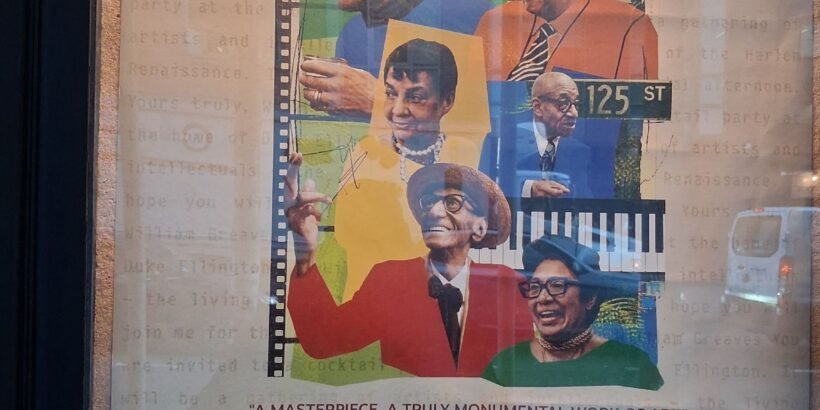
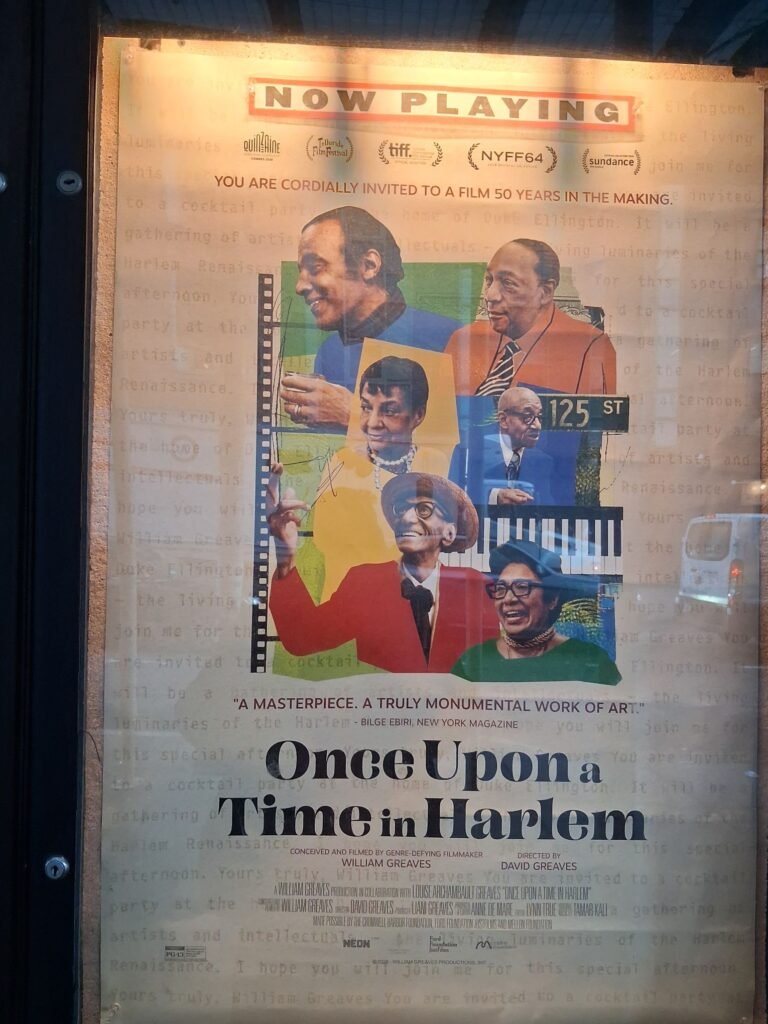
The Harlem Renaissance is a well-known and studied occurrence in Black American history. There are numerous books about this time period. The new documentary “Once Upon A Time in Harlem” adds even more to our understanding, as we get to hear from some of the surviving figures of the Harlem Renaissance. Once Upon A Time In Harlem comes from hours of footage captured by noted filmmaker William Greaves. Captured in 1972, this gathering of artists, writers, and activists convened at Duke Ellington’s townhouse to discuss their recollections of this important era. William Greaves passed away in 2014, never had the chance to release the footage, but this film was preserved and released by his son David Greaves. 54 years later, this documentary is coming to the public. I had the opportunity to view the film on opening night at the Film Forum.
In the documentary are luminaries such as Romare Bearden, Arna Bontemps, Eubie Blake, Ida Mae Cullen, and James Van DerZee. Historian John Henrik Clarke, Richard B. Moore, and chief librarian Jean Blackwell Hutson are also in the documentary. In the discussions, the remaining figures paid homage to their contemporaries who had passed. Poets and writers like Claude McKay and Zora Neale Hurston were discussed, and their contributions were recalled.
There are important social and political discussions in this documentary also.
They discussed the positive aspects and the contradictions of Garveyism.
Richard B. Moore in particular highlighted the role of Black leftists and socialists during the Harlem Renaissance, reminding people of activists like Hubert Harrison, Chandler Owen, and A. Phillip Randolph. Their contributions are at times overlooked in the Black Radical Tradition.
Claude McKay s famous poem, “If We Must Die” came as a response to a rash of lynchings. There has long been a connection to our lived experiences and the work that Black artists put out in the world.
This documentary would be a wonderful teaching tool for scholars who want to educate about the Harlem Renaissance. It preserves important conversations, about the Black arts, and Black creatives, and the lasting legacy of the Harlem Renaissance. Reading about the subject in books is one thing, but hearing the realities of that time reflected in boisterous conversation, from those who were there when it was taking place adds a new dimension to our understanding of that time. In the larger context of our current period of social malaise and cultural stagnation, this film reminds us of what we are capable of producing as a people. I highly recommend this documentary.