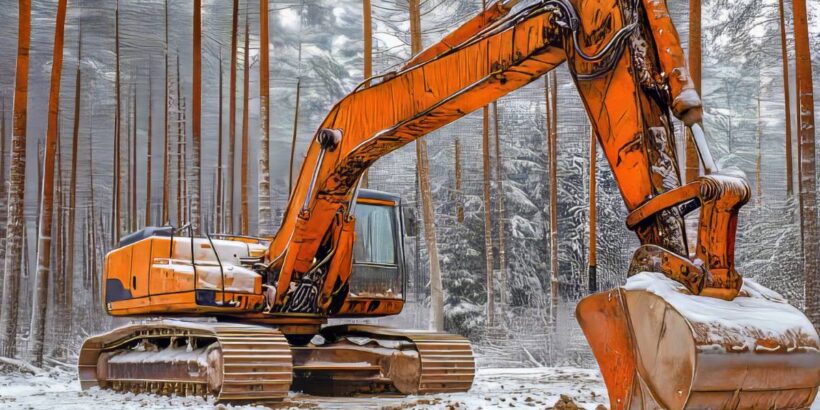
Even though most heavy equipment is built to operate in demanding environments, extreme temperature remains one of the most influential external factors affecting machine performance. Whether equipment is working in freezing winter conditions or under intense summer heat, these conditions can alter how efficiently systems operate.
Shifts in temperature can affect a variety of things in this type of machinery. Understanding the specifics of how temperature impacts heavy equipment performance helps operators and managers better anticipate operational changes in different environments.
Cold Temperatures Reduce System Responsiveness
Cold weather can significantly slow the performance of many heavy equipment systems. As temperatures drop, operating fluids naturally become thicker. This increased viscosity creates greater resistance as the fluid moves through pumps, valves, and internal passages.
When fluids move more slowly, machine components also respond more slowly. Operators may notice delayed control responses, sluggish movements, or reduced speed during early operation. Components must work harder to circulate thicker fluids, which can temporarily limit machine efficiency. In extreme conditions, equipment may require additional time before reaching normal operating performance levels.
These effects are not necessarily signs of malfunction but rather natural mechanical responses to colder environments. However, they can still influence productivity if machines are expected to perform at full capacity immediately after startup.
Extreme Heat Reduces System Efficiency
High temperatures create a different set of performance challenges. Instead of thickening, fluids exposed to extreme heat become thinner. When fluid viscosity drops too much, it becomes less effective at maintaining stable pressure and lubrication.
Reduced lubrication increases friction between moving components. As friction increases, systems require more energy to perform the same tasks, reducing overall efficiency. Machines operating in high heat may also experience reduced power output or inconsistent performance as systems struggle to maintain proper pressure levels.
Heat can also place additional stress on internal components, forcing systems to work harder to maintain normal operation. Over time, these conditions can reduce the stability of machine performance during long work cycles in hot environments.
Temperature Extremes Increase Component Strain
Mechanical systems rely on precise tolerances between parts to operate smoothly. Temperature extremes can interfere with these tolerances because materials naturally expand in heat and contract in cold conditions.
In hot environments, expanding metal components may create additional friction or resistance between parts. In colder environments, contraction can tighten clearances between components, potentially increasing mechanical resistance. Both situations place added strain on the system as parts adjust to changing temperatures.
Even small changes in material dimensions can affect how smoothly components move and interact. These variations can influence machine responsiveness, energy consumption, and overall performance during operation.
Temperature Swings Can Disrupt Fluid Performance
There’s another way in which rapid temperature fluctuations affect heavy equipment performance. When systems transition quickly between different temperature conditions, fluid properties might change in unintended ways.
Fluids that shift between thicker and thinner states may struggle to maintain consistent pressure and flow. These inconsistencies can lead to irregular machine movements, fluctuating performance, or uneven system responses.
Stable fluid performance is essential for smooth equipment operation. While this isn’t always a controllable issue, teams can maintain systems more effectively to reduce its frequency. For example, knowing how to maintain an excavator’s hydraulic system will help better manage this issue.